
What is Acne and Why Does it Happen?
Exploring the Causes and Solutions
What is Acne and Why Does it Happen?
Exploring the Causes and Solutions
Acne is more than just a surface-level skin concern, it is a complex condition influenced by a range of internal and external factors. Whether you are dealing with occasional acne breakouts or persistent acne, understanding what is happening beneath the skin is a crucial first step toward effective acne prevention and treatment.
From hormonal imbalances and dietary choices to environmental triggers and skincare habits, the root causes of acne are multifaceted and often interconnected. In this post, we will take a closer look at the physiological processes behind acne development, uncover the key contributors both inside the body and out. By understanding why acne occurs, you will be better equipped to choose treatments and products that target the real causes, not just the symptoms.
Let’s dive into the science behind breakouts and discover what it really takes to achieve clearer skin.
What is Acne?
There are tiny glands, generally attached to your hair follicles, that naturally produce and secrete an oil that lubricates and protects the skin. These glands are known as sebaceous (seh-BAY-shish) glands. The oil produced by the sebaceous glands is known as sebum (SEE-bum). Sebum is an oily, wax-like substance that is made up of fat molecules, or lipids, that include:
• Glycerides
• Fatty acids
• Cholesterol
• Squalene
• Wax
Why is Sebum Important for my Skin?
The production of sebum is regulated by the bodies’ hormones, such as estrogen and testosterone. Generally, sebum production increases during puberty and slowly decreases with age. Sebum gives the skin a natural and oily shine and keeps the skin soft and pliable. Additionally, sebum has many protective aspects, for example sebum:
• Forms a barrier on the skin to help regulate body temperature
• Helps to prevent moisture loss
• Prevents bacteria and fungi from penetrating the skin
• Is a natural lubrication for things that rub up against the skin (friction or pressure)
In theory, sebum is a critical substance that works to protect your skin. However, when the sebaceous oil glands produce too much sebum, this excess oil production results in clogged hair follicles and pores on the skin, which is known as acne!

What Causes Acne?
There are many factors that can increase excessive oil production, thereby causing skin inflammation and acne breakouts. Let’s dig deeper into what causes acne and learn how to prevent acne breakouts from occurring.
AUTOIMMUNE FACTORS
While acne is not an autoimmune condition, the inflammatory nature of autoimmune diseases, hormonal imbalances, and medication side effects can contribute to acne or acne-like breakouts. For example, autoimmune diseases (e.g., lupus, psoriasis, or Hashimoto’s thyroiditis) can involve chronic inflammation, which in some people, may exacerbate acne symptoms or cause acne-like rashes.
Additionally, autoimmune diseases (e.g., thyroid disorders) can affect hormone balance, which in turn affects sebum production, potentially triggering or worsening acne. Finally, some treatments for autoimmune diseases (e.g., corticosteroids, immunosuppressants) can cause acne as a side effect.
DIET & NUTRITION
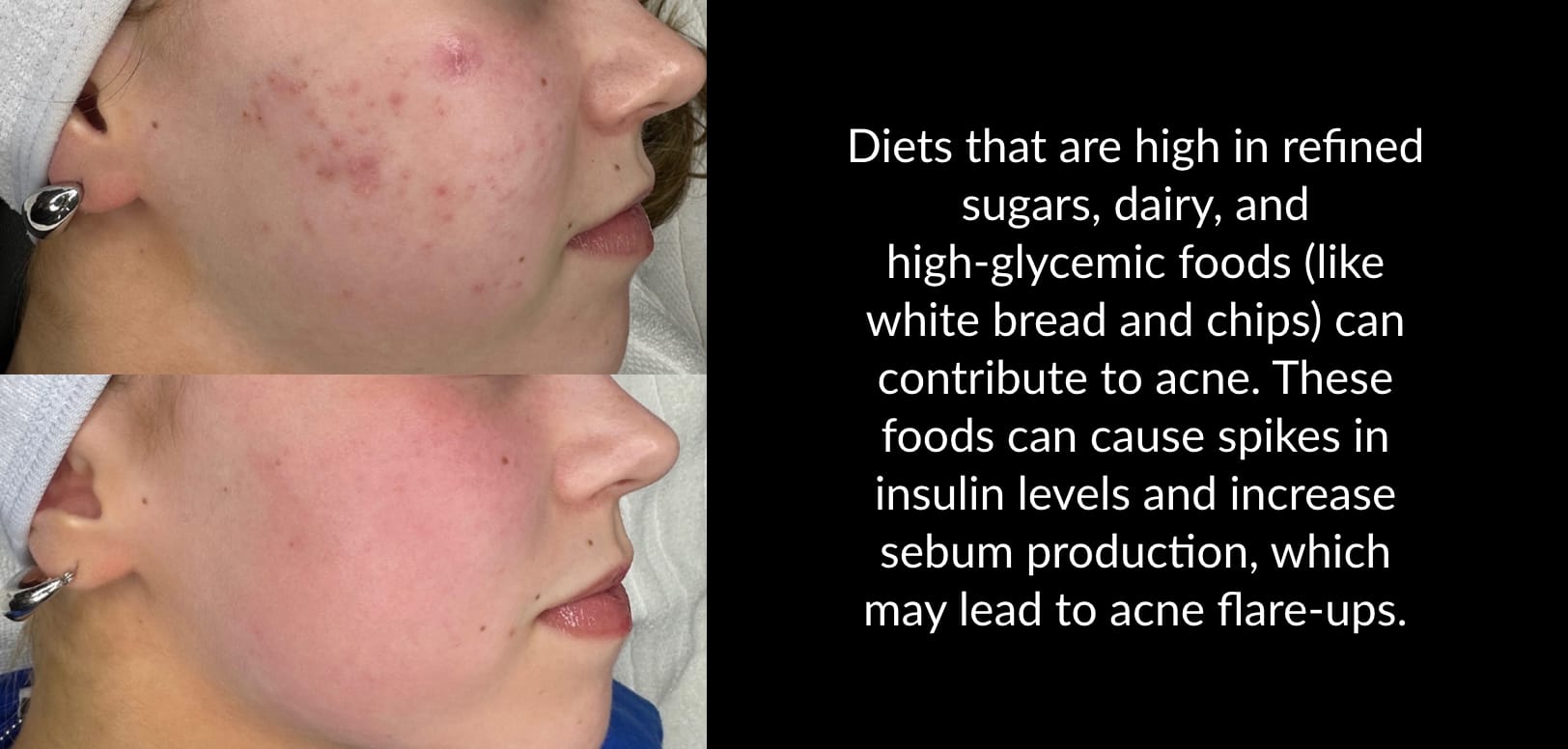
Diets that are high in refined sugars, dairy, and high-glycemic foods (like white bread and chips) can contribute to acne. These foods can cause spikes in insulin levels and increase sebum production, which may lead to acne flare-ups.
ENVIRONMENTAL FACTORS & COSMETIC PRODUCTS (Comedogenic Products)
Often exposure to pollutants, humidity, or certain skincare products can irritate the skin. This irritation may lead to bacterial infections, clogged pores, or an imbalance in skin oils, all contributing to acne.
What’s more is using makeup or skincare products that contain pore-clogging ingredients (like oils or certain alcohols) can block pores and contribute to acne breakouts. Implementing an effective skincare routine and cleansing the skin at the end of the day helps reduce and prevent acne production.
FRICTION OR PRESSURE
Acne that is caused by friction, pressure, or heat is known as Acne Mechanica. Acne Mechanica is often seen in athletes or individuals who wear tight clothing or gear like helmets or straps. Acne Mechanica is caused when sweat and trapped oils from pressure or friction block the pores of the skin.
Although, it is also very important to be aware that any time we touch our faces, or put long term pressure against our skin, we increase our chances of an acne breakout. As Crystal likes to say, “Do Not Touch Your Face!”
GENETICS/HEREDITARY INFLUENCE
Your genetic makeup can influence the likelihood of developing acne. If your parents had acne, you are more likely to develop it as well due to inherited tendencies toward oily skin or hormonal imbalances. Click here to dive deeper into the influences of acne and heredity.
HORMONES
Hormonal fluctuations, especially during puberty, menstruation, pregnancy, or when starting/stopping birth control can create hormonal acne. Hormones (particularly androgens) stimulate sebaceous glands to produce more oil, increasing the likelihood of clogged pores and acne.
STRESS
High stress levels can trigger the release of the hormone cortisol, which increases oil production in the skin. Stress can also exacerbate acne by promoting inflammation and increasing the likelihood of breakouts.
Different Types of Acne Did you know that the different types of acne are often generically referred to as pimples, whiteheads, or blackheads? Since there are so many different types of acne, each varying in severity, it is important to know the difference so that you can receive proper acne treatments and appropriate acne remedies and acne care. Putting it All Together!
Acne can result from a combination of the above factors, so addressing the underlying causes (like using the right skincare products, managing stress, adjusting your diet) can help reduce or prevent acne production and breakouts.
To learn how to treat acne, be sure to make an appointment with Crystal Skin Care in Kaysville, Utah today and discuss your acne concerns with Master Esthetician Crystal and her highly skilled staff. You will receive information about using their premium acne skincare products for establishing and maintaining clear skin, in addition to incorporating their cutting-edge acne treatments and services into your acne skincare routine.
Enjoy this crystal-clear skin wisdom?
Share this post!
More Articles
